V. Kikilias: “Shipping’s green transition cannot come at the expense of citizens — We need realism and respect for what economies can withstand”
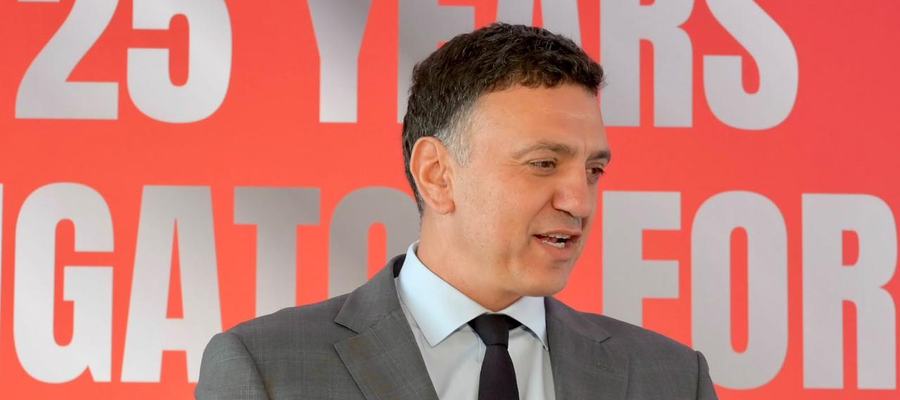
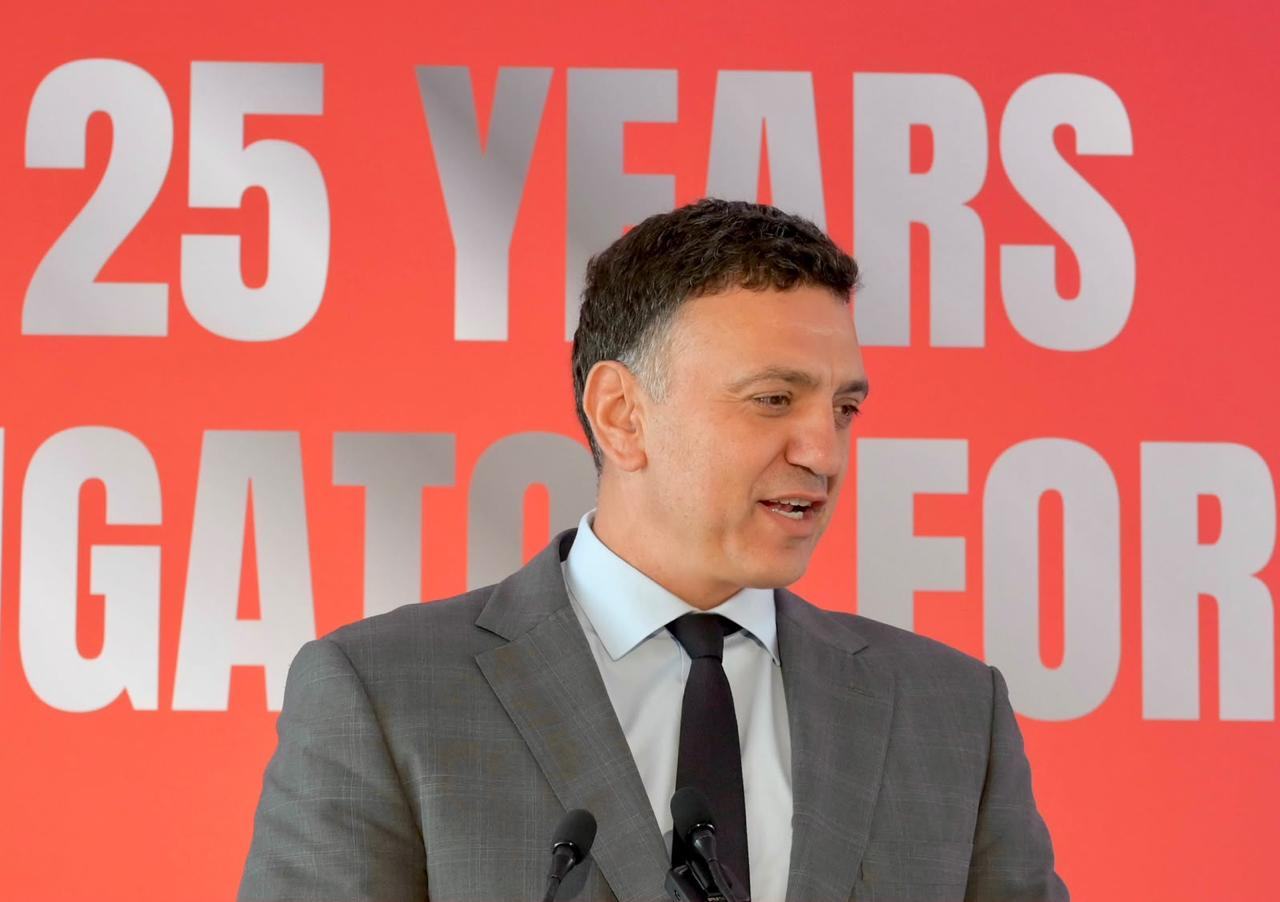
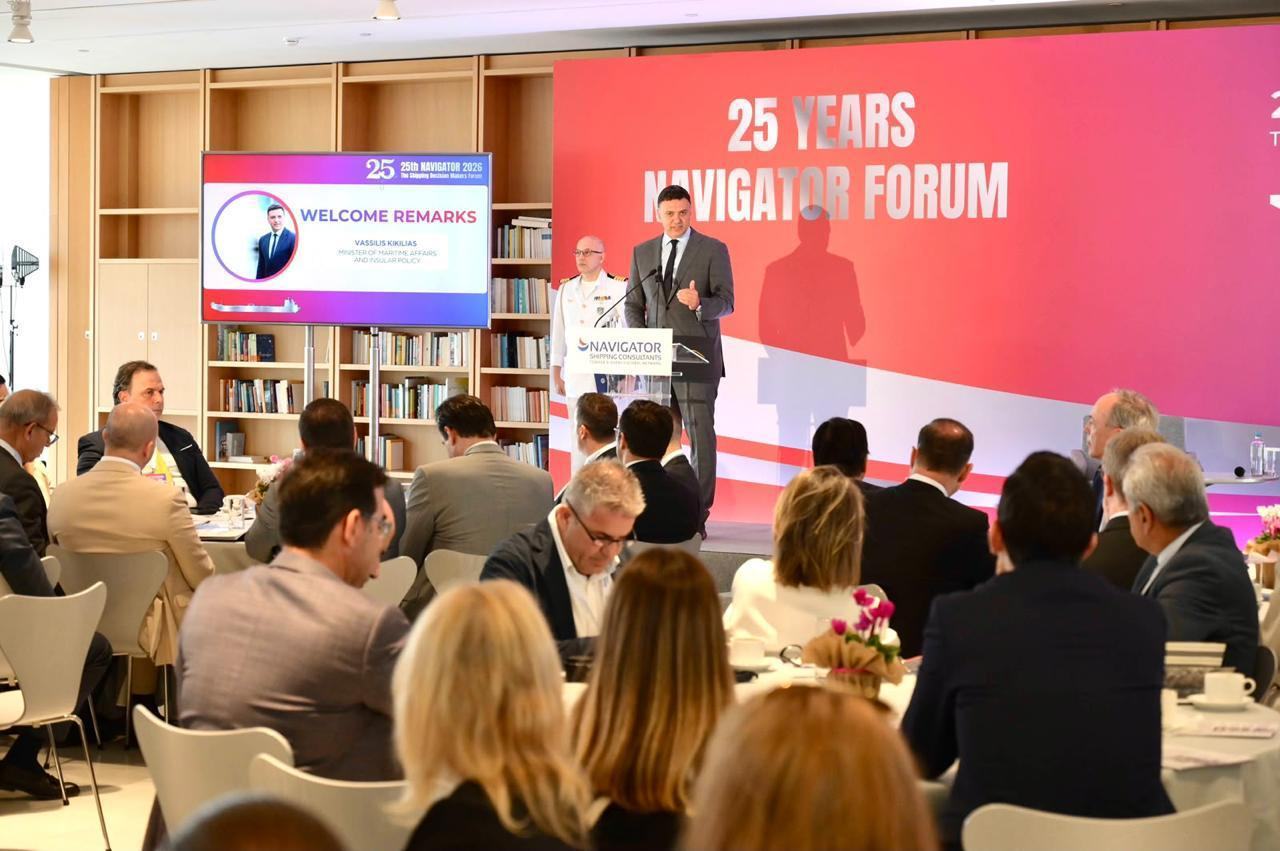
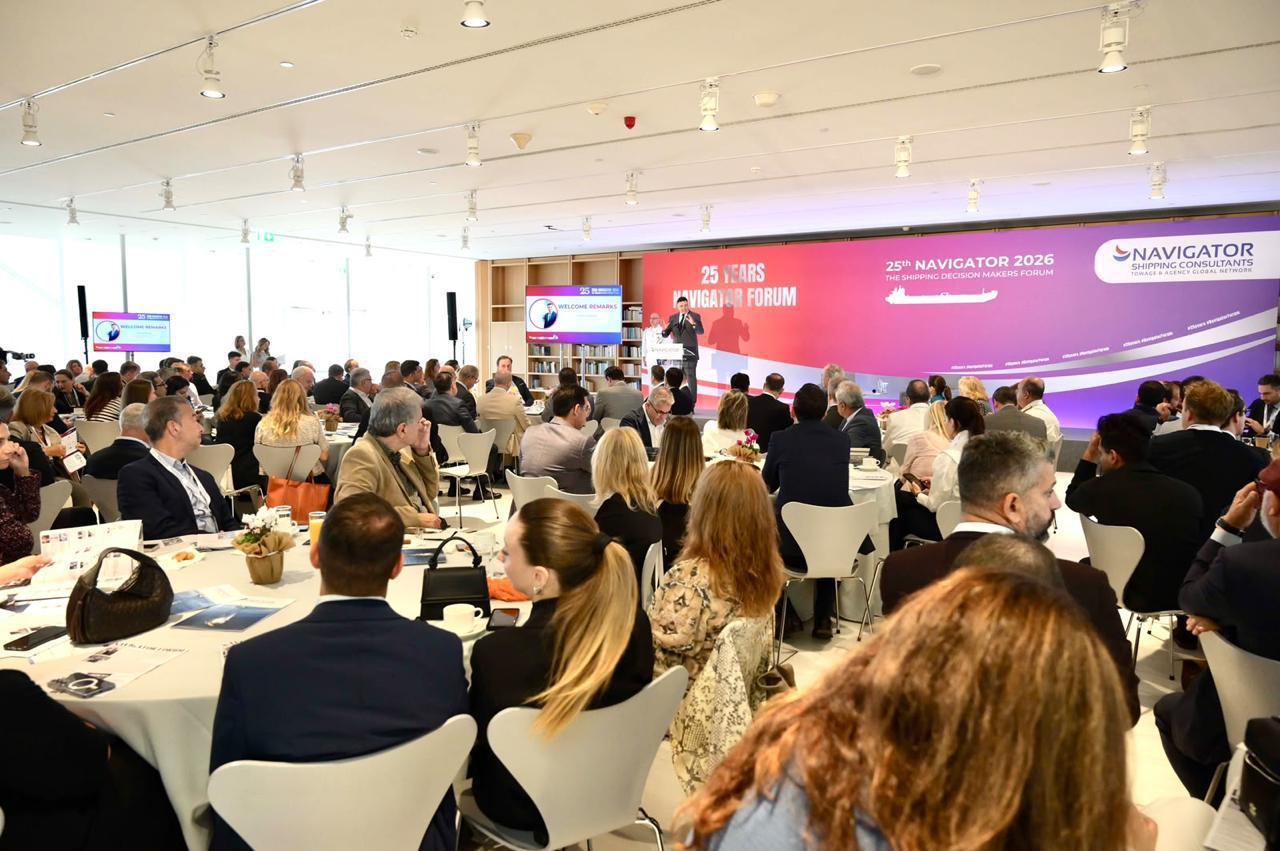
In his address at the 25th NAVIGATOR 2026 – The Shipping Decision Makers Forum, held at the Stavros Niarchos Foundation Cultural Center, Minister of Maritime Affairs and Insular Policy Vassilis Kikilias spoke about the need for shipping’s green transition to proceed at a pace that societies and economies can sustain, the importance of including shipping in the Greece–US Strategic Dialogue, and the opportunities maritime education creates for young people.
“What happens at sea directly affects inflation, energy prices and the prices of products on supermarket shelves. People feel this in their daily lives in Greece, Europe, the United States, China, Japan, Korea, India — everywhere. And unless we respond properly, the crises that follow will be enormous,” he said.
Speaking more specifically about international developments and the impact of geopolitical conflicts, he noted:
“The Strait of Hormuz has its own particular significance. The war in the Persian Gulf has a decisive impact on the global economy. And a conflict that begins in the sphere of geostrategy and geopolitics does not simply disappear overnight. I remember leading analysts and technocrats assuring us through newspapers, television networks and news websites about five years ago that the war in Ukraine would begin and end within a few days. Almost five years have passed, and the war continues. Then came the enormous crisis in the Middle East. And, as you can all see, I believe the situation today is getting worse rather than better.”
The Minister placed particular emphasis on the direct link between shipping and people’s daily lives, stressing that decisions in the sector must take account of their economic and social impact: “The moment people can no longer afford the essentials for their families or heat their homes in winter will also be the moment shipping faces very serious problems. And history shows that shipping has never followed a straight path. There have always been fluctuations and cycles of boom and bust. That is why all of us, governments and companies alike, must be particularly careful about the decisions we make, each in our own field, keeping people in mind and ensuring that the goods we transport, whether energy, food or medicines, reach them at affordable prices.”
On shipping’s transition to alternative fuels and the discussions at the International Maritime Organization (IMO), he said:
“This is a noble goal. Of course we want to leave a better planet to the next generation and to our children. But we must be realistic about how we do it. That is precisely the position taken by the Greek government, the Prime Minister and the Ministry of Maritime Affairs, guided by sustainability and the realities of everyday life and of shipping. Alternative fuels are not yet available at sufficient scale, nor will they be in the near future. Other solutions may emerge over the next ten to fifteen years; perhaps nuclear energy will be one of them. We will see. Today, however, amid this enormous global crisis, the transition fuel available to us is liquefied natural gas (LNG). And everyone took it for granted until the Strait of Hormuz closed, halting the passage of oil and gas tankers, as well as cargo ships carrying other critical supplies, such as fertilisers. Suddenly, we all faced a new reality. That is why we said that, in a time of crisis, we must take careful, considered steps. Sooner or later, we will reach our goal, but we must move at a pace that allows societies and the economy to remain viable throughout this transition.”
Discussing the economic impact of the proposed taxation of shipping emissions, he warned of the substantial increase in costs that shipowners would bear and ultimately pass on to consumers:
“If you penalise shipping, if you penalise shipowners by imposing hundreds of billions of euros in taxes on them, it is more than obvious that they will be unable to bear that cost. Such taxation would increase costs so significantly that they could not be recouped even over a ship’s 35- to 40-year lifespan. So what would shipowners do? They would pass the cost on to charterers, who would in turn pass it on to the real economy. And who would ultimately pay the price? The public. That would be unacceptable to the government of Kyriakos Mitsotakis and to me personally as Minister of Maritime Affairs. That is why we tried to persuade our European partners and friends that we cannot move at this pace. And we were pleased to see the relevant vote at the International Maritime Organization (IMO) postponed last year. I am not certain what will happen this year. But we remain steadfast in our efforts to convince everyone that the link between society, the wider public and the private shipping sector is real and strong.”
Turning to the Greece–US Strategic Dialogue, he highlighted the importance of including shipping as the third pillar of the talks for the first time, following sustained cooperation with senior US government officials:
“For the first time, after eight years and five rounds of Strategic Dialogue between the United States of America and Greece, the Greek government and the Ministry of Maritime Affairs, following extensive work with senior US government officials, succeeded in including shipping as the third pillar of the Strategic Dialogue discussions. This is extremely important for us and for the sector. Why is this happening? I think it was more than obvious that powerful countries in the East had become very active in shipping, shipyards and the maritime industry. Now it appears that the Western world, too, is returning, investing and strengthening its policies in a sector that serves 80% to 90% of global trade.”
On Greek shipping’s position in the international market, he highlighted the strong presence of the Greek-owned fleet, both globally and in Europe, and its particularly significant role in transporting liquefied natural gas (LNG): “We are particularly proud that a small country such as Greece, which accounts for just 2% of European GDP, holds such an important position in global shipping. We are proud of Greek shipowners, whose fleet accounts for 20% of global tonnage and more than 60% of the European fleet, while in critical sectors such as the transport of liquefied natural gas (LNG), the share is even higher,” the Minister said.
On maritime education and career prospects for young people, Mr Kikilias noted: “We have invested €90 million through a new budget for maritime education. And we believe this investment is delivering very substantial benefits. It offers social and career prospects to a young man or woman in Greece who decides to join this great shipping family. It gives them the opportunity to make their dreams come true. After all, what are the dreams of an average Greek family? For young people to be able to spread their wings, to dream and take flight, to have their own money. To find their other half, fall in love, get married, buy or rent a home. These are things that are very difficult to achieve today. Look at what is happening with the housing crisis, particularly in Europe. This sector offers tremendous opportunities.”
On the opportunities created by the development of the wider maritime ecosystem, he stressed: “If we connect shipping with the ecosystem I have been talking about for the past two years, which includes ports, energy, floating storage and regasification units (FSRUs), marinas, high-end yachting tourism and trade, the opportunities are even greater.”
Concluding his address, he emphasised:
“No one can be truly happy, however powerful they may be. And shipowners in Greece today are very powerful. But they cannot prosper unless the rest of society prospers alongside them, unless everyone moves forward together at the same pace. If you are a leader with foresight, you understand that this is a collective effort. Everyone is needed. That is how societies move forward. That is how we mature, learn from the past and invest in the future. We will be there. We do not claim that the Greek government can take the place of entrepreneurs and the private sector. Our role is to set the rules, promote sound legislation and, of course, protect everyone: the shipping industry and the sector, but also the people who are there asking for our help. We will succeed together, and we will leave no one behind.”
Σχετικές εικόνες